Your business requires regular cleaning based upon potential hazards, operational volume, food allergen presence, and regulatory checks, combined with verification documentation demonstrating HACCP compliance, inspection results, and government health requirements. The following sections detail essential sanitation program components.
Main Points
- Brampton's food safety cleaning experts maintain restaurants, grocery departments, commissaries, warehouses, bakeries, schools, mobile vendors, and allergen-sensitive operations.
- Zone-based workflows sanitize high-touch surfaces, food-contact equipment, kitchens, floors, drains, restrooms, and storage areas for avoiding cross-contamination.
- Checking of proper chemical concentration, compatibility, and contact time is performed by certified contractors, with completion logged using samples, reviews, and remedial documentation.
- Regular, regular, and seasonal tasks designated by section constitute sanitation plans grounded on danger, production rate, transitions, incidents, and regulations.
- Vendors should exhibit HACCP, health regulatory competency, safety training preparation, insurance, credentials, colour-coded instruments, and compliance-ready maintenance paperwork.
What Brampton Establishments Require Food Safety Cleaning?
Any Brampton facility that processes, stores, prepares, packages, or distributes food needs food safety cleaning. You must use it if your establishment falls under public health review, food rules, or HACCP systems. That requirement covers restaurants, cafeterias, commissaries, grocery food departments, butcher shops, seafood counters, convenience stores, and institutional kitchens.
You also need proper hygiene cleaning in supply warehouses, manufacturing facilities, refrigerated storage, bakeries, school feeding programs, reception facilities, and delivery centers. Temporary and mobile establishments count too, including mobile kitchens, festival sellers, and temporary food stands. If your staff handle ingredients, section prepared foods, heat finished items, or keep allergens stored, your facility needs recorded sanitation procedures. In Brampton, cleanliness isn't voluntary; it's part of statutory, business, and public health compliance.
What Do Brampton Cleaning Professionals Handle?
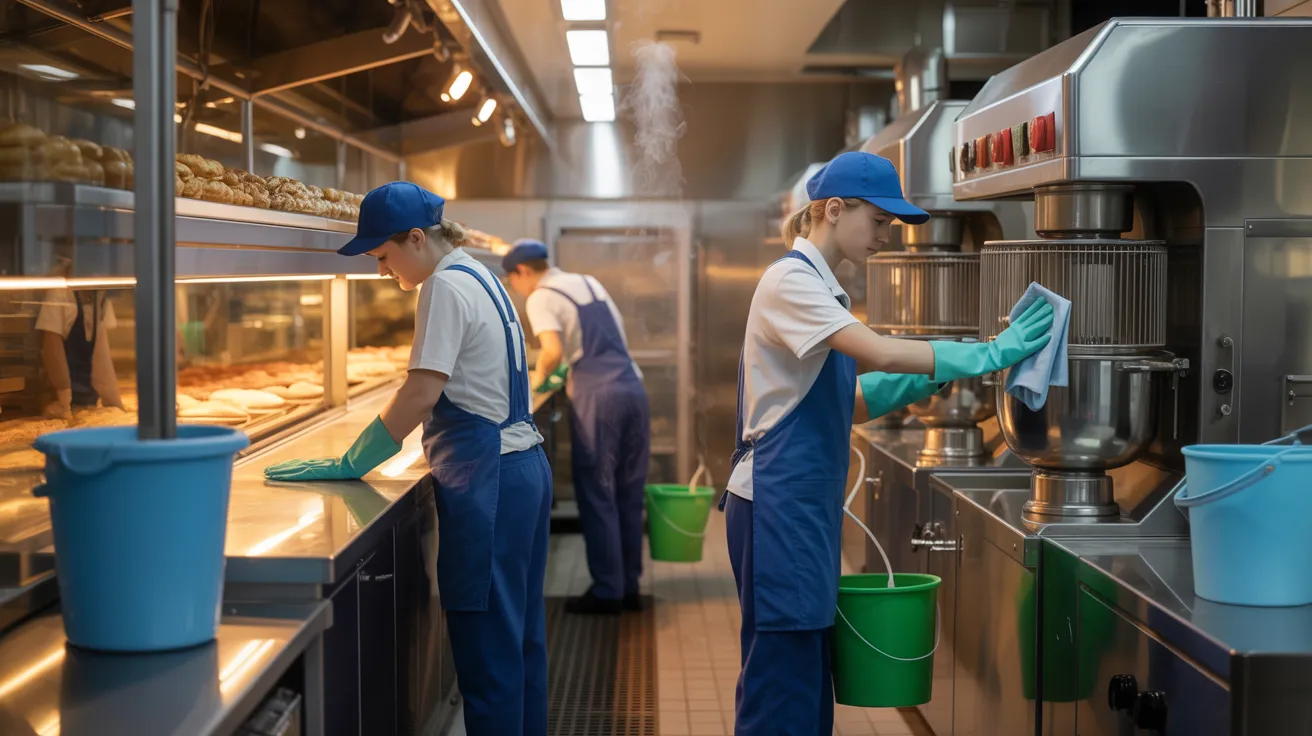
Professional cleaning teams specializing in Brampton disinfect high-contact surfaces, kitchen facilities, ground surfaces, and sanitary facilities to satisfy food safety standards and health requirements. Focus on these locations stems from extreme cross-contamination risk, potential for accidents, and compliance issues.
Understanding their cleaning procedures allows you to confirm your operation's sanitation satisfies required standards and regulations.
Sterilizing High-Touch Surfaces
Brampton cleaning experts focus on high-touch surface cleaning because these touch areas can spread microbes and organic matter throughout a location. You must have a formal plan for cleaning frequently touched items like handles, plates, switches, railings, equipment controls, payment terminals, and fridge pulls. Using surface identification mapping, teams identify every regularly used area and establish cleaning timing
rotating towels frequently, maintaining one-way systems, and segregating cleaning supplies according to area. Doing so maintains your disinfection protocol documented, well-documented, and ready for inspection consistently.
Kitchen Areas, Floor Surfaces, and Bathroom Spaces
Brampton cleaning services focus on kitchens, floors, and restrooms as each zone involves distinct food safety, accident, and wellness concerns. In industrial kitchens, you need degreasing on cook lines, equipment exteriors, drains, prep surfaces, and splash zones to reduce contamination and pest pressure.
Documented floor care is also provided as part of the service.
Restroom sanitation requires decontaminating touchpoints, fixtures, partitions, dispensers, and waste containers, replacing items and managing smells. They also service restaurant moprooms, where chemical storage, sink hygiene, and drainage conditions can affect sanitation compliance and staff safety daily.
Why Food Safety Cleaning Matters in Brampton
In Brampton, you must copyright food-safe cleaning standards to meet regulatory standards and pass inspections. You also reduce cross-contamination by cleaning and sanitizing food-contact surfaces, equipment, and high-touch areas correctly. Most importantly, you help protect community wellness by reducing the chance of food poisoning in your establishment.
Health Code Compliance
Food businesses in Brampton face strict public health standards, making food safety cleaning vital to adhering to health code requirements, defending patrons, and eliminating enforcement action. You must get the full story maintain hygienic food handling zones, recorded sanitation plans, appropriate product handling, and documented employee protocols that align with municipal and provincial inspection expectations.
Quality sanitation practices assists in controlling allergens by decreasing particles buildup on joint machinery and commonly contacted zones.
Cross-Contamination Prevention
Meeting health code standards also depends on your ability to prevent cross-contamination during routine food preparation and sanitation. You must separate raw ingredients from ready-to-eat foods, clean work areas after each use, and store chemicals away from food-contact items. Clear procedures reduce transfer risks and support consistent compliance during inspections.
Building allergen isolation prevents key allergens from reaching shared surfaces, containers, or equipment. Utilize dedicated cutting boards, color-coded tools, and precise instrument labeling so staff don't mix items in cooking or serving.Mandate hand cleaning following raw meat, seafood, eggs, or allergen-containing products. Refresh cleaning cloths frequently, and confirm sanitizer strength with test strips. When your team follows these practices each shift, you foster a cleaner, more secure operation that exceeds Brampton's safety standards daily.
Public Health Safeguarding
When sanitation protocols breaks down, you don't just face inspection failure—you increase the chance of foodborne illness affecting customers, staff, and the wider Brampton community. You also undermine your responsibility in safeguarding community wellness, especially in high-traffic food premises where contamination can spread quickly through surfaces, equipment, and touchpoints.
You require cleaning protocols that remove contaminants, sanitize effectively, and validate outcomes. This requires following contact periods, selecting approved disinfectants, documenting procedures, and coaching employees to satisfy health-unit expectations. These controls promote illness spread by minimizing pathogens before reaching surfaces or food. Throughout Brampton, strong cleaning safeguards susceptible populations, reduces outbreak risk, and proves accountability. When you adhere to standards, you go beyond requirements—you lower hazards and enable safer food service region-wide.
How Does Cleaning Support Food Safety Compliance?
Maintaining strict sanitation practices promotes food safety compliance by lowering contamination exposure, controlling pathogen growth, and keeping your facility in accordance with sanitation requirements under HACCP-based programs and public health regulations. You confirm that contact surfaces stay visibly clean and microbiologically controlled, backing documented preventive controls and inspection readiness.
Systematic cleaning additionally enhances allergen prevention by clearing residues that can lead to undeclared allergen exposure. When you integrate established sanitation practices with safety training, your staff can execute established protocols, employ approved chemicals correctly, complete records accurately, and handle discrepancies before problems worsen. Consistent cleaning facilitates product tracking, establishes corrective steps, and demonstrates commitment in audits. It also helps you preserve product safety, preserve compliance standards, and minimize the risk of enforcement actions, mass recalls, formal complaints, and preventable safety threats.
When Do You Schedule Commercial Cleaning?
high-volume production periods, product changeovers, spill events
You should also arrange periodic tasks separately
How Do You Choose Brampton Cleaning Experts?
Screen providers initially by their food-safe sanitation requirements—not budget alone. You need to confirm that every company meets CFIA, public health, and HACCP-aligned expectations for your operation. Demand insurance verification, WHMIS compliance, training records, and management systems. Evaluate technician understanding of contamination dangers, chemical safety, and documented sanitation practices.
You should further examine operational reliability and accountability. Request testimonials from Brampton food businesses, then review response times, corrective-action procedures, and communication standards. Validate the company supports supplier audits and can supply compliance documentation to authorities or external parties. Confirm equipment is maintained, color-coded implements are used appropriately, and site-specific hazards are recognized. A experienced service protects compliance, product integrity, and your brand reputation.
What does a Food Safety Cleaning Plan consist of?
Write out a plan that outlines every sanitation activity, guideline, and role before starting production. You should record cleaning frequencies, approved chemicals, dilution rates, contact times, tools, and verification methods for each area, surface, and device. Remember to add pre-operational inspections, corrective actions, and employee training requirements.
Your plan should also cover cross-contamination prevention, waste disposal, pest management measures, and scheduled documentation for bathrooms, drainage, ground surfaces, and food-handling zones. Clarify how you'll distinguish raw from ready-to-eat operations, support ingredient tracking, and copyright accurate allergen labeling through validated cleaning between product changes. You should establish accountability, preserve signed records, and review results against regulatory standards, HACCP controls, and customer requirements. When gaps appear, revise procedures immediately and re-educate staff.
Regular Posed Inquiries
Can cleaning services support overnight shifts in Brampton properties?
Yes, you can arrange sanitation coverage to support nighttime operations in Brampton facilities. You'll coordinate nighttime cleaning around production schedules, access controls, and staffing requirements. Services generally map overnight logistics to minimize interruption, maintain standards, and document completed tasks. You should confirm arrival timeframes, management, lockout procedures, and disposal methods before beginning service. If you operate regulated spaces, you'll also want cleaning records that support inspections and internal quality assurance.
Do sanitation professionals provide emergency spill response services?
Yes, you can locate Brampton sanitation experts providing spill response options. They handle hazardous incidents, evaluate risks, isolate contamination, and begin swift decontamination to minimize exposure and prevent business disruption. You should verify response rates, credentials, PPE measures, and disposal methods. If your facility must meet compliance standards, select a service that tracks incidents, follows procedures, and ensures audit compliance.
Will eco-friendly disinfectants clean safely food preparation areas?
Definitely, eco-friendly disinfectants function safely on food-contact surfaces if you select disinfectants approved for food contact that adhere to regulatory standards. You should check contact times, dilution rates, and rinse procedures before use. Plant based formulas decrease toxic chemical contact, but you must have demonstration of efficacy against harmful bacteria. To preserve residue-free areas, stick to exact manufacturer guidelines and verify your cleaning agent adheres to relevant food safety standards.
Do cleaning schedules support production fluctuations?
Yes, you can modify sanitation programs for seasonal production changes. You should adapt frequencies, staffing, disinfectants, and testing procedures to match production rhythms while sustaining regulatory adherence. You'll minimize operational delays by organizing cleaning around line changes, high demand periods, and usage cycles. You should additionally revise procedural documents, employee training, and environmental monitoring to capture periodic risks, new allergens, or higher contamination levels. Periodic assessments preserve your schedule current.
Do professional cleaning services educate employees on sanitation best practices?
Absolutely, commercial cleaners frequently provide staff training on hygiene standards. Your staff gets instruction on correct chemical handling, dwell times, contamination avoidance, machine takedown, and documentation. They typically align instruction with HACCP, GMP, and CFIA or local public health requirements. Many also perform health inspections to ensure adherence, pinpoint weaknesses, and strengthen corrective measures. This helps you maintain uniform standards, clear audits, and reduce food safety risks consistently.
Summary
Partnering with Brampton food safety and commercial cleaning experts goes beyond tidying—it guarantees your operation meets inspection standards and your standards remain compliant. From processing facilities to kitchens, each sanitized surface and maintained corner reduces health hazards and prevents major expenses. By scheduling maintenance at suitable frequencies and executing a comprehensive cleaning strategy, you shield staff, clients, and your reputation. In a heavily regulated sector, sanitary conditions are non-negotiable—they're critical to business success.